Composer: Wolfgang Amadeus Mozart (b. 1756 - d. 1791)
Performance date: 27/06/2015
Venue: St. Brendan’s Church
Duration: 00:06:35
Recording Engineer: Richard McCullough, RTÉ lyric fm
Instrumentation: 2vn, va, vc
Instrumentation Category:String Quartet
Artists:
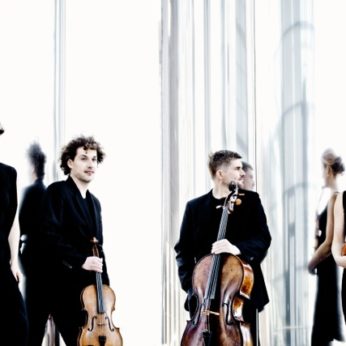
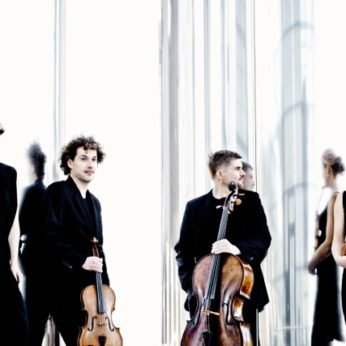
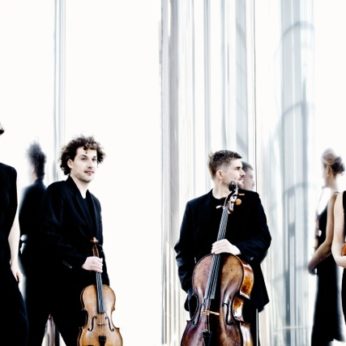
Signum Quartet (Kerstin Dill, Annette Walther [violins], Xandi van Dijk [viola], and Thomas Schmitz [cello]) -
[quartet]
Fugues have the reputation of being academic and strict and they would appear to be unlikely objects of passion for a young woman of twenty. However a few months before Mozart and Constanze got married, he wrote to his sister that when Constanze heard the fugues she fell in love with them. Now she will hear nothing but fugues, but above all in this field, nothing but Handel and Bach. It seems that as well as writing arias for Constanze, who was a fine singer, Mozart also wrote duets for two keyboards that they would play together.
Mozart’s so-called fugal period coincides exactly with his first year of marriage in 1782-3, so it seems Constanze’s interest in fugues was partly responsible for Mozart’s intensive study of Bach and Handel at this time. This study was also encouraged by weekly musical gatherings at the house of Baron van Swieten where nothing but the music of Bach and Handel was played. In December 1783 he wrote the Fugue in C minor for two pianos, probably for himself and Constanze to play and in 1788 he re-scored it for four strings and added the short Adagio introduction, which is the work we hear today. It is a dramatic and brilliantly accomplished summation of his fugal studies and Mozart must have valued it highly to return to it after four and a half eventful years.
Copyright © 2026 West Cork Music. All rights reserved.
Designed and developed by Matrix Internet
