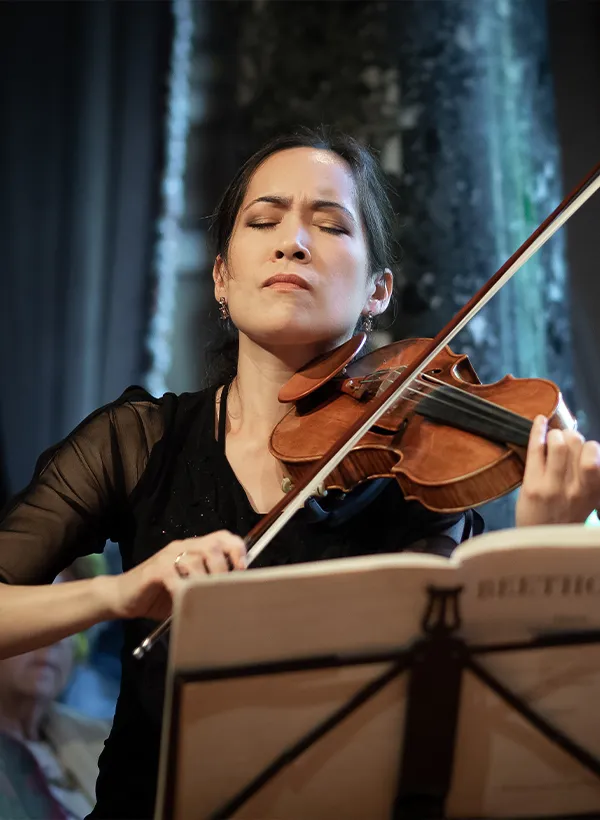
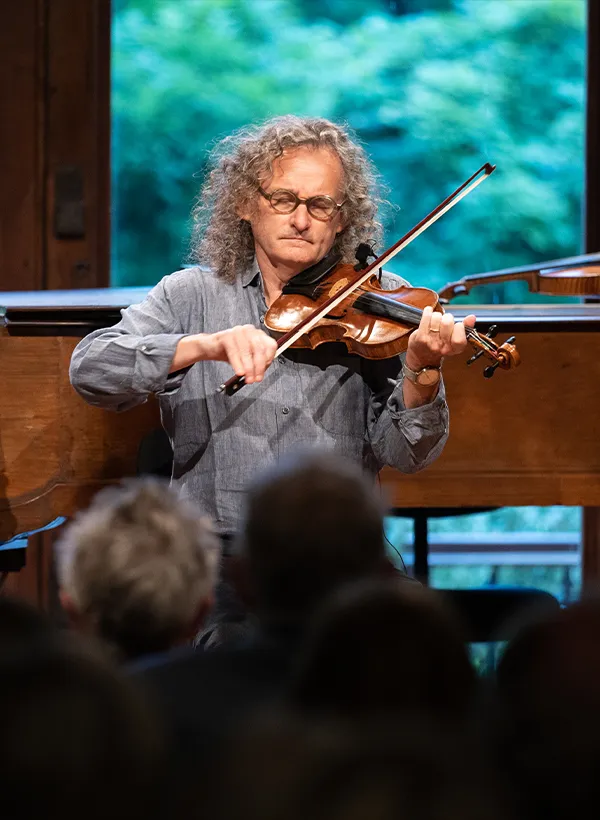
Aria sopra la Bergamasca, Op.3 no.24
The
Bergamasca is one of the oldest and simplest of all the grounds, based on a
repeated I-IV-V-I pattern. The dance’s origins lie in the Northern Italian city
of Bergamo,
where it was performed as a courtship dance for couples, and the earliest
surviving instrumental version dates from around 1560. Uccellini’s uplifting
‘Aria sopra la Bergamasca’ appears in his opus 3 collection of 42 sonate, Arie,
et correnti, published in Venice
in 1642. With this work, he proves himself to be a master of variation form,
and during the 31 repetitions of the ground bass, the violins duel in a battle
of virtuosity that never fails to raise spirits and get toes tapping.