New album from Donnacha Dennehy
‘Limina’ produced by Nonesuch Records
Many congratulations to Donnacha Dennehy on the release of his new album. The album features two concerti showcasing performances by pianist Eliza McCarthy and violinist Stephen Waarts; the soloists are accompanied by National Symphony Orchestra Ireland under the baton of Ryan McAdams.
Hailed as “Ireland’s most important living composer” by the New York Times, Donnacha Dennehy’s Grammy award winning music has been called “thrilling” (Guardian), “mesmerizing” (New York Times) “arrestingly beautiful” (New Yorker) and “shockingly original, while also being compulsively listenable” (Boston Globe).
Dennehy Dennehy founded Crash Ensemble, Ireland’s now-renowned new music group, while still in his twenties in 1997. Alongside the singers Dawn Upshaw and Iarla O’Lionáird, Crash Ensemble features on the debut 2011 Nonesuch Records release of Dennehy’s music, entitled Grá agus Bás, beginning an association between Dennehy and Nonesuch Records that continues today.
Donnacha has been a frequent visitor to the West Cork Chamber Music Festival, for which he has written multiple chamber works, including Chorale for string quartet (2023), premiered by Pacifica Quartet at Bantry House, and Wild Ground (2026), premiered by Attacca Quartet at Bantry House. You can listen to Chorale on the West Cork Music Archive.
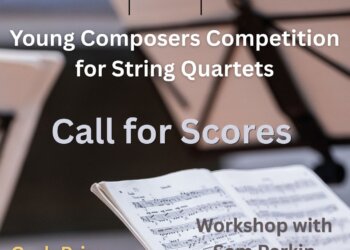
Donnacha has also, on several occasions, adjudicated the West Cork Music Young Composers Competition, an annual competition for Irish composers, giving young composers the opportunity to write a string quartet, and workshop it with the adjudicator and a conservatoire string quartet.
William Kenlon has reviewed the new album ‘Limina’ for the Journal of Music, describing “strong, colourfully orchestrated gestures atop an intricate and thoughtful architecture.” Kenlon’s review is warm and encouraging “it is a shame that several factors – chiefly economic ones – often conspire to prevent present-day Irish composers from exploring concerti and concerto-like forms. Large ensembles are already reluctant to gamble on music by all but the most proven living composers; the length, complexity and technical demands of soloistic works like these are further barriers to their performability. One hopes that the dissemination and warm reception of these two concerti will lead to more Irish composers having the opportunity to explore extended works for soloist and large ensemble.”
Donnacha now lives in America, and is a professor of music at Princeton University. His music is published by G. Schirmer in New York.