
Search...
What is Sean-Nós Singing? Ireland’s Ancient Vocal Singing Tradition
Sean-nós – a form of traditional unaccompanied solo singing performed in the Irish language – is widely regarded as one of the oldest and most distinctive vocal traditions in Europe.
Rooted in the Gaeltacht communities of Connacht, Munster, and Ulster, the song form has been passed down through oral tradition for centuries. West Cork Music has presented sean-nós as a central element of its Masters of Tradition festival in Bantry since the festival’s founding.
The world-class trad music festival – directed by the extraordinary Martin Hayes – nurtures traditional forms while celebrating the cream of Irish musicianship and emerging talent.
The History of Sean-Nós
The term sean-nós means “old style” in Irish, and the tradition it describes predates written music in Ireland. Its origins lie in the Gaelic bardic tradition, where poetry and song were the primary means of preserving history, mythology, and community memory. From Bantry, it is just a short drive to Farranamanagh Lake on the Sheep’s Head peninsula. In the walking loop that passes the lake, you will find the traces of one of Ireland’s great bardic schools – the O’Dálaigh Bardic School at Drmonea, near Kilcrohane.
Unlike the harmonised choral traditions that spread across Europe through the church, sean-nós remained largely outside formal musical institutions, surviving instead through family lineages and tight-knit communities. It is easy to see how that tradition operates when you are with us at Masters of Tradition. Singers will often share tales with our audiences about how and where they learnt a song. And conversations across the festival are part of this great tradition of passing on tunes and songs
The strongest regional traditions for sean-nós today are associated with the Múscraí Gaeltacht, not far from us here in Bantry, Connemara in County Galway, and Donegal in the northwest.
What Makes Sean-Nós Distinctive
Sean-nós is pften sung solo, without instrumental accompaniment, and typically without a fixed, metronomic rhythm. The singer shapes the tempo freely around the natural stresses of the Irish language, and ornamentation is central to the style. Singers decorate the melody with subtle variations, turns, and grace notes, and this improvisation makes each performance unique. Because of this improvisation and personalisation, sean-nós is sometimes considered to be a kind of Irish jazz.
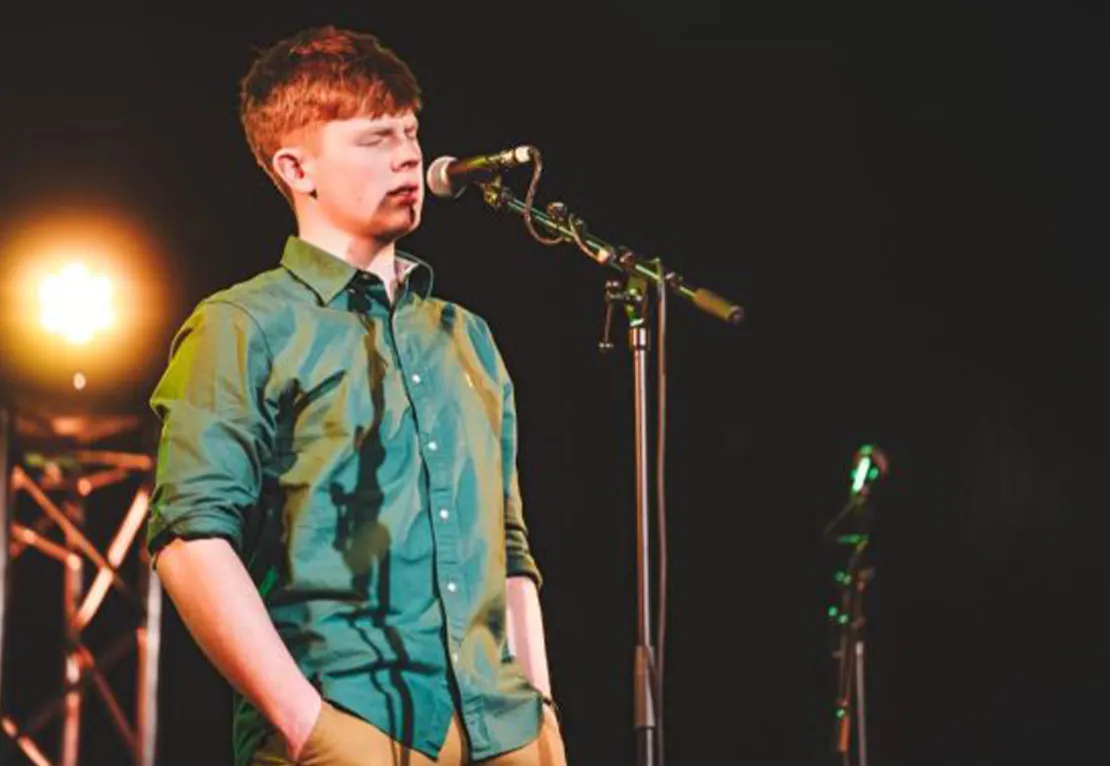
The physical style of delivery also sets sean-nós apart from more audience-focused singing styles. The intimate song form relies on singers turning in to the language, and staying attentive to the connection between words and tone. That means that their performance style is often quite private. A singer will often close their eyes, or look away from the audience, turning inward to the music rather than performing outward to the crowd.
Sean-nós can also be sung together. West Cork Music has regularly welcomed Séamus and Caoimhe Uí Fhlatharta to Bantry, to perform at Masters of Tradition, in or Chamber Music Festival, and as part of our West Cork Music concert series. They share their exquisite sibling harmonies, as well as the language and songs learnt in the Gaeltacht region of Connemara where they grew up.
Sean-Nós and the Irish Language
Sean-nós is inseparable from the Irish language. The melodic phrases are shaped by Irish vowel sounds and speech rhythms, and the experience of a sean-nós song sung in English is entirely different to one in the Irish language. This makes it one of the most direct expressions of Irish-language culture still in living practice, and one of the reasons its preservation is considered important not just musically but culturally.
Sean-Nós at Masters of Tradition, Bantry
Masters of Tradition, West Cork Music’s annual festival of Irish traditional music, song, and dance, creates space for the sean-nós tradition each year. Curated by fiddle player Martin Hayes, the festival brings together the finest exponents of traditional Irish music — including sean-nós singers — for five days of concerts, sessions, and conversations in Bantry, County Cork.
West Cork’s own Nell Ní Chróinín, from Béal Átha’n Ghaorthaidh in the Múscraí Gaeltacht, performed at the festival in 2022. She is one of the most celebrated sean-nós singers of her generation — and the youngest ever recipient of the TG4 Gradam Ceoil Amhránaí na Bliana in 2012 . Her presence at Masters of Tradition is a reminder that the tradition the festival honours is still very much alive in the communities of West Cork itself.
Piaras Ó Lorcáin – a traditional sean-nós singer from Crossmaglen, County Armagh, and one of the most distinctive young voices in Irish traditional song – joined us as part of our 2026 concert series, reflecting West Cork Music’s commitment to celebrating and nurturing the contemporary sean-nós tradition.
The festival runs 19 – 23 August 2026 in Bantry.
For the Festival programme and ticket information, visit the Masters of Tradition programme page.
Further Reading and Resources
For a deeper introduction to sean-nós singing, the Irish Traditional Music Archive holds an extensive collection of recordings and documentation.
For tickets and full programme information for Masters of Tradition 2026, visit the Masters of Tradition homepage.
FAQ
Sean-nós is a form of traditional unaccompanied solo singing performed in the Irish language. The term means “old style” in Irish, and the tradition is one of the oldest vocal forms in Europe.
Sean-nós originates in the Gaeltacht communities of Ireland, particularly Connemara in County Galway, Donegal, and the Múscraí. The tradition has alwasy been passed down from person to person, through an oral tradition.
Sean-nós is sung in Irish (Gaeilge). The tradition is closely tied to the Irish language and its distinctive speech rhythms and sounds.
Sean-nós is performed at Masters of Tradition, a world-class festival celebrating the cream of traditional music. It is held in Bantry, County Cork, each August. Tickets are available at westcorkmusic.ie.
Masters of Tradition 2026 takes place 19 – 23 August 2026 in venues across Bantry, County Cork. A full programme and tickets are available here at westcorkmusic.ie.